“There are things that are important to us, so we speak about them. There are things so important to us that the words flow out in a burst of emotion, rich words, expressive and vibrant. Then, there are things that shake us to the core. Things that do not care for the mind’s permission or for the right words—for the mind cannot fathom them, the most poignant words could not contain them. Things that can only break out in a cry, in a scream, and then in silence. This is the sound of the shofar: The very core of our souls crying, ‘Father! Father!’” (Rabbi M.M.Schneerson)
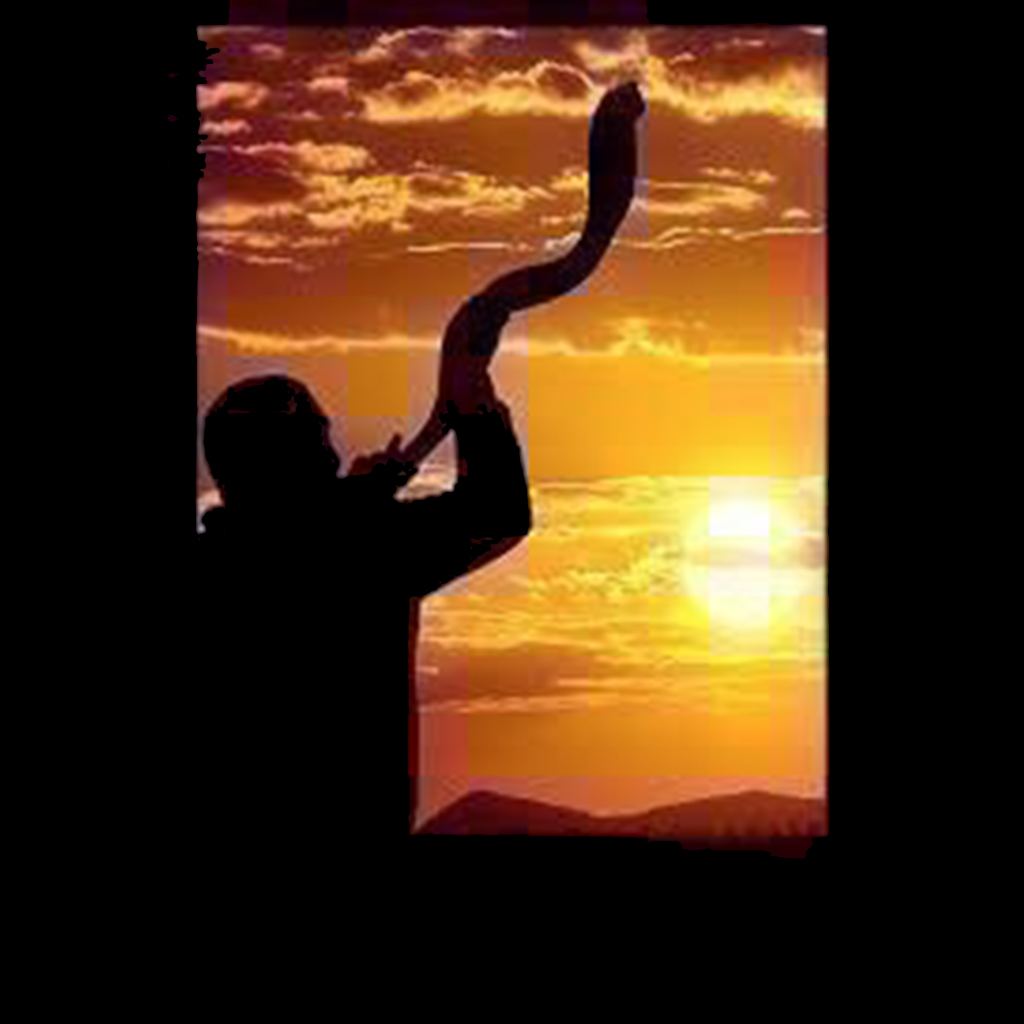
The silver trumpets during Temple times were blown on each new moon but throughout the month of Elul, the custom evolved to blow the shofar in the daily synagogue services.There are four different notes:
TEKIAH—One long straight blast (representing the coronation of the king—also the joy and celebration when we acknowledge Him as our king).
SHEVARIM—Three medium wailing sounds (representing the sobbing cry of a Jewish heart—and repentance). The first Hebrew letter (‘Resh’) in the word ‘Rosh’ is shaped like a shofar indicating brokenness.
TERUAH—Nine quick staccato blasts in quick succession (representing the call to arouse from spiritual slumber).
TEKIAH GEDOLAH—Prolonged, unbroken: final appeal for repentance and atonement. The thirtieth and last day of Elul is known as the ‘last trump.’ The shofar is not blown and in Jewish tradition one is called to be alert, for the approach of the next day (Rosh ha Shanah) comes as a ‘thief in the night.’
The phrase ‘thief in the night’ originates from biblical times. The Temple had guards and the captain of the guard was known as the ‘thief in the night.’ He would roam silently around the building inspecting the guards to ensure they were all awake. If he found anyone slumbering, he would set the fringes of their clothes on fire. Are we ready for the coming of the King of Kings? When Jesus returns, will He find us prepared or sleeping?
What is the Purpose for Sounding the Shofar?
• When we hear the sound of the shofar we are reminded of our commitment to do all that the Lord has revealed for us through His Word.
• The sounding of the shofar arouses holy fear in the hearts of believers. As the prophet Amos asked, “Can a shofar be blown in a city and the people not tremble?” (Amos 3:6)
• The shofar blast was heard as the people gathered at Mount Sinai and God gave the Torah to His people. As we receive His shofar, we pledge to pass this blessing on to our children. We know that the ram’s horn was sounded to announce and celebrate the birth of Jesus in Bethlehem.
• In Jewish tradition, the trumpet’s sound confuses Satan and ten days later on Yom Kippur, he is completely powerless.
• The shofar was sounded throughout the period of the Temple’s existence. It is blown today as we mourn its destruction on 9th Av.
• The sounding of the shofar speaks of spiritual renewal. When the Jewish exiles under Ezra and Nehemiah returned and the 2nd Temple was rebuilt, revival broke out.
• The walls of Jericho fell when the blast of the shofar was sounded as instructed by Joshua. It is a powerful weapon when we use it in obedience to the command of God.
• The prophets compare their message to the sound of the shofar.
• Finally, the shofar will be sounded when Jesus returns to gather His elect from the four corners of the Earth to Himself. This is the sound of the Tekiah Gedolah, the long, unbroken sound blown on the last day of Elul leading into Rosh ha Shanah.
1 Corinthians 15, Verses 51- 53 says, “51 Stay close because I am going to tell you a mystery—something you may have trouble understanding: we will not all fall asleep in death, but we will all be transformed. 52 It will all happen so fast, in a blink, a mere flutter of the eye. The last shofar will call, and the dead will be raised from their graves with a body that does not, cannot decay. All of us will be changed! 53 We’ll step out of our mortal clothes and slide into immortal bodies, replacing everything that is subject to death with eternal life.”
 “On that day, with a command that thunders into the world, with a voice of a chief heavenly messenger, and with a blast of God’s shofar, the Lord Himself will descend from heaven; and all those who died in the Anointed One, our Liberating King, will rise from the dead first. 17 Then we who are alive and left behind will be snatched up together with them into the clouds to meet
the Lord in the air. This is how we, the resurrected and the living, will be with Him forever. (1 Thessalonians 4:16–17) Maranatha! Come Lord, come!