B’ha-alotecha Num 8:1–12:16; Zech 2:14[10]–4:7; Luke 17:11–18:14
This week’s Scripture portion focuses upon setting up the Menorah (lampstand) in the Tabernacle. The priests would ‘ascend’ to the Menorah and kindle (set up) the lights to keep them burning 24/7 symbolising God’s continuous care for us who is a “lamp to our feet and a light to our path.” (Ps.119:135)
In Rev.2-3 we read about the ‘Seven congregations of Asia.’ Each one was represented by the Menorah. These were literal churches. Each one holds an historical profile and also a personal application for us. Only two were commended but what is interesting is that all seven were surprised at their evaluation. 70 times throughout this book it uses the phrase, “I looked and beheld” referring to what John saw, because there are many people who see yet remain spiritually blind as there are those who hear but do not hear.
There are over 800 references to the OT more so than in any other NT book and 18 of the 22 chapters refer specifically to God’s wrath in the end times.
Only two congregations were commended. Smyrna was encouraged to remain strong through great persecution and the Philadelphian congregation remained faithful and true even though they outwardly appeared weak and fragile. The other five were warned that their Menorah would be removed unless they made necessary adjustments. What could be a worse thing than for God to remove His presence from us?
In Judaism, the Menorah is a symbol of the Jewish people who are called to be ‘a light to the nations’ (Is 42:6). For most Jews their light remains unlit because it can only be rekindled through Yeshua, who is the Light of the world and a “lamp (menorah) for our feet and light to our path.” He is the true light as prophesied in Scripture: (Is60:1-5:) “Arise, shine, for your light has come! The glory of Adonai has risen on you…Nations will come to your light, kings to the brilliance of your rising.” Yeshua urges every believer in Matt:5:16 to “Let your light so shine before men, {i.e., God in Us} that they may see your good works, and glorify your Father which is in heaven.”
The Menorah was positioned so that it cast light forwards not behind God always reveals the way forward giving light to our pathways. “In Him there is no change nor shadow of turning.” (James) It was the only source of light in the Holy Place reminding us that God is the true source of spiritual light that leads us into all truth and all other “lights’ are counterfeit. In 2 Cor11:14 the Bible says Satan can present himself as an angel of light and he does so with great subtlety and effectiveness to deceive many. He presents sin as something to be desired, and false teaching as enlightening and life-changing but it has a sting to it that ends in death.
Some more things about the Menorah: The 7 branches cast their light forwards and the wicks on both sides were directed to the central stem which concentrated the light in the middle instead of being spread out. A Ner Tamid, (eternal light) is always placed in the front of every synagogue because it reminds us that God is the source of all light.
The Torah reveals that the Menorah was made from one piece of hammered gold (Num.8:4) weighing 45 kg and worth $3 million. Gold and fire represented by the Menorah reveal God’s absolute purity. It is a fearful thing to stand in the presence of the Living God! But, it reminds us that we become holy through being fashioned into His likeness – by being hammered. “He will sit as a refiner and purifier of silver; He will purify the Levites and refine them like gold and silver. ” (Mal 3:3)
God reserves a special blessing for those who walk in holiness: “Blessed are the pure in heart for they shall see God.” To “see” God in the biblical sense is to know Him intimately. But, it is also a literal promise for every believer who will see Him face to face, “panim el panim” in the world to come.
The Levites serving God in the Tabernacle purified themselves before serving in the tabernacle. (Num 8:5–7) Every detail connected to them: body, soul, spirit, even down to their clothing, was fully consecrated. This is the measure of holiness that God also demands from us: “…You also, as living stones, are being built up a spiritual house, a holy priesthood, to offer up spiritual sacrifices acceptable to God through Messiah Yeshua” (1 Pet. 2:5). [cf also Rev.1:6 and 5:12]
We also read in this parsha of God’s light, His manifest glory, which shone in the Israelite camp called the Shekinah Glory that covered the Tabernacle during the day as a pillar of cloud and as a pillar of fire during the night (9:15). The Shekinah led the Israelites through the desert and they travelled according to when it moved from the camp. (9:18-23). There was never a time when the Israelites failed to follow the leading of the Shekinah despite their failings and shortcomings.
The Shekinah glory, God’s Divine presence, reminds us of a future time when He will come in the clouds in all His glory to gather us to Himself for those who walk in obedience to His calling: “16 For the Lord Himself shall come down from heaven with a commanding shout, with the voice of the archangel and with the blast of God’s shofar, and the dead in Messiah shall rise first. 17 Then we who are alive, who are left behind, will be caught up together with them in the clouds, to meet the Lord in the air—and so we shall always be with the Lord.”
Although it was only one year since God had delivered the Israelites from Egypt, the Shekinah glory incredibly did not stop them from murmuring and complaining even to the point of rebellion. God in His infinite mercy and compassion gave them chance after chance until finally His judgement broke out in their midst: “ 11 The people griped about life in the wilderness, how hard they felt things were for them, and these evil complaints came up to the ears of the Eternal One. He was furious about this ingratitude, faithlessness, and lack of vision. His anger was kindled, and His fire raged among them and devoured some of the camp’s perimeter.” (11:1-3)
Whenever a believer allows himself to drift to the outskirts of God’s presence, he will become vulnerable to the lies of the enemy. And those who lust after the things of the flesh are in effect trampling underfoot the eternal sacrifice He has made for us through Yeshua.
And, if that was not enough, shortly afterwards Aaron’s own family, Miriam and Aaron, slandered Moses for marrying a Cushite woman, and demanded a higher status and greater recognition than they already possessed—pride. For speaking lashon harah (slander, gossip) and for pride, God temporarily struck Miriam with leprosy for 7 days.
Lashon hara is a type of spiritual leprosy. A godly person refuses to gossip and only speaks good of others or maintains his peace.
In traditional Judaism we are cautioned not to confuse lashon hara with motzei shem ra (pure slander), which is speaking derisive things which are not true. As the rabbis teach, if speaking that which is true (but is negative, divisive, and/or derisive) is one of the worst of all sins, then how much so the fabrication of a complete lie against another person?
There is a Hassidic tale about a man who went around telling malicious lies about his rabbi. Later, he felt remorse and went to the rabbi begging for his forgiveness. The rabbi replied, “Take a feather pillow, cut it open, and scatter the feathers to the winds.” When he returned the rabbi told him, “Now, go and gather the feathers. Because you can no more make amends for the damage your words have done than you can recollect the feathers.”
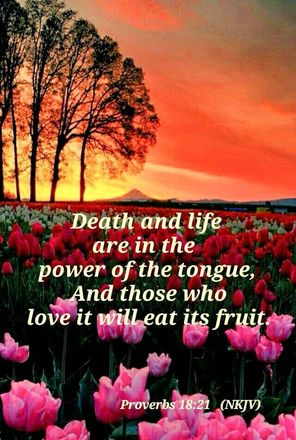
Speech has been compared to an arrow: once the words are released, like an arrow, they cannot be recalled, the harm they do cannot be stopped, and the harm they do cannot always be predicted, for words like arrows often go astray.
Spreading gossip will always create a bad scent and it only takes one person to contaminate a whole city. The prime ingredients are lies and half-truths, but even even when it contains truth it still causes untold destruction.
The Sages say (Bab. Erchin 15b) that for three transgressions one forfeits his portion in the life hereafter: murder, adultery, and idol worship, but lashon hara is equivalent to all three combined.
Spiritual tzara’ot (leprosy) emanates from slanderous speech as we saw with Miriam. Yet, in all of this, why is slandering others so enticing? Why do some believers speak evil about others?
We see how lashon hara is being used as a tool in the enemies hands very effectively in this day especially in social media in preparation for the coming of the Anti-Christ.
Here is an illustration of the character of God. One of the beautiful things about Him is that He keeps secrets. He has a million ways of telling everybody all about my negatives, but He keeps it all secret. He only boasts to others about the good things! In other words, God covers and protects us rather than exposing our faults and weaknesses to everyone else. He even covered for Judas Iscariot when he betrayed Him at His last supper.
In our Torah portion we notice that the leaders were to serve the people, not the reverse. Moses became known as the ‘eved Hashem’ (servant of God). He interceded on behalf of those who slandered him. Instead of seeking revenge he blessed them. In Isa 42 this was also prophesied about the coming Messiah: “Here is my servant, (eved) whom I support, my chosen one, in whom I take pleasure!”
It is interesting how the Tower of Babel and the pyramids of Egypt symbolising the carnal world, represented a ‘top-down’ society that was broad at the base and narrow at the top. However, the Jewish symbol of the menorah is the very opposite: broad at the top, narrow at the base. This reveals how in God’s Kingdom, the leader serves the people, not vice versa. Yeshua made this point very clear throughout His teachings, (e.g., John 13).
Rabbi Yochanan said, “Wherever you find the greatness of the Holy One, there you find His humility.” Greatness is humility, for God and for those who seek to walk in His ways. It is also the greatest single source of strength, for if we do not place ourselves in the centre, we cannot be injured by those who criticise or demean us. They are shooting at a target that no longer exists.”
Raphael ben Levi;