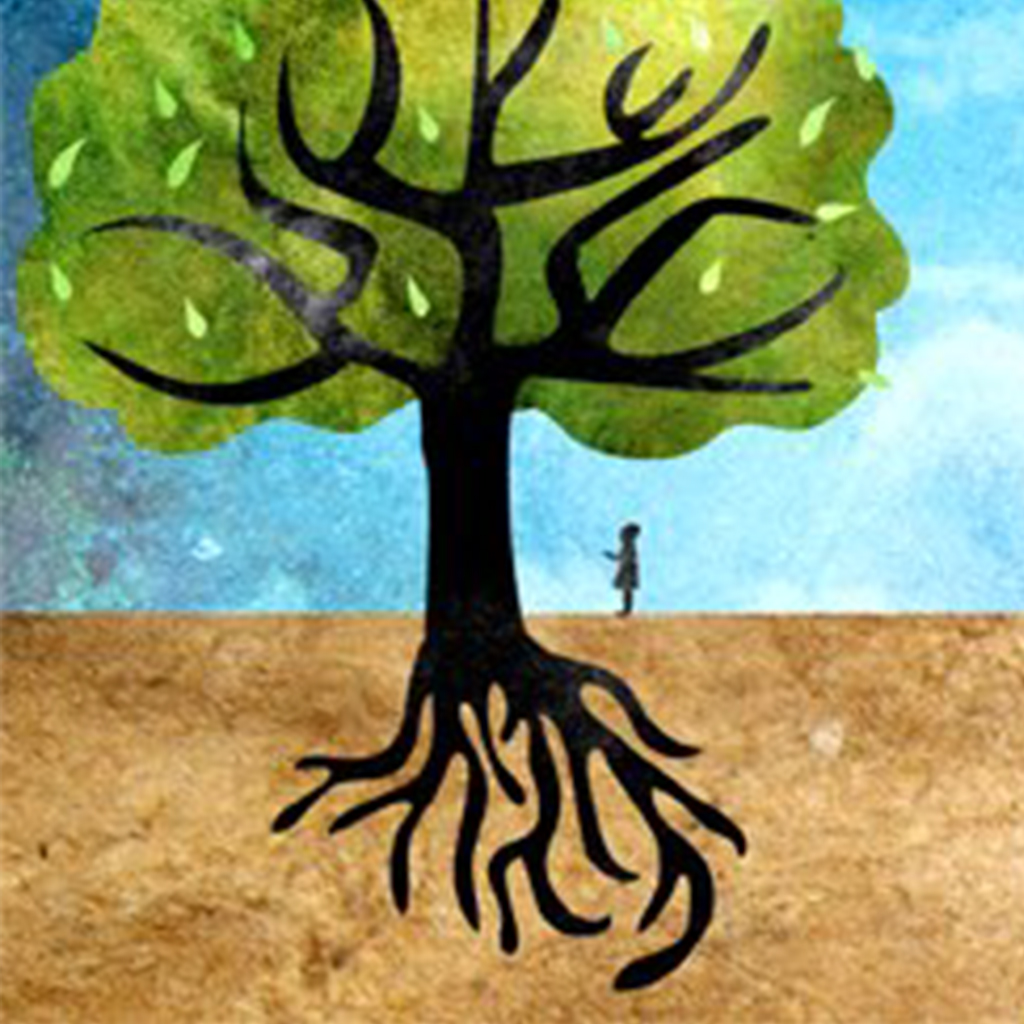
“The story the Bible tells is in large part a tree story, as the bible both begins and ends with a Tree in paradise — and trees figure both practically and symbolically throughout its pages. Also the dividing-line between the messages of the Old and New Testaments, and the fulcrum of the ages, is a Tree — the tree on which the Messiah was crucified — for both Peter and Paul refer to the Messiah being “hanged on a tree” (Acts 5:30, 10:39; I Peter 2:24; and Galatians 3:13 from Deuteronomy 21:23). The Messiah was made sin for us on this tree that he might in turn become a Tree of Life for those who look to him for salvation.” (Hope of Israel Ministries)
And then we have the event recorded in Scripture where Jesus cursed a fig tree:
“On the next day, when they had left Bethany, He was hungry. 13 Seeing at a distance a fig tree in leaf, He went to see if He would find anything on it. But He found nothing but leaves, for it was not the season for figs. 14 He said to it, “No one
will ever eat fruit from you again!” And His disciples were listening [to what He said].” (Mark 11:12-14)
Why would Jesus want to curse a fig tree causing it to wither? At face value it does not make much sense, but when one examines things more deeply, we see that He purposefully chose to prophetically illustrate the Jewish nation’s unfaithfulness (cf. Jeremiah 7) with consequences leading to their exile to the farthest corners of the earth. Only 40 years later in 70 AD, Jerusalem fell under the Romans, the Temple was destroyed and Israel as a nation (not as a people) withered.
Jesus clearly understood that it was not the appointed time for the ‘fig tree’ to yield its fruit as recorded by the prophets, when Israel would recognise and turn to their Messiah. He illustrated this by cursing the fig tree.

Following the destruction of the Second Temple, the land became symbolically like a fig tree during winter, devoid of leaves, and fruit (i.e., its people) and things remained like this until it began to bud once again; this impossible event became a reality, as prophesied in Scripture, when Israel once more bore figs and became a sovereign state in 1948. As recognised by many students of the Bible:
“The return of the Jews to their ancient heritage, after having been wanderers for nearly two thousand years, is one of the greatest miracles of our time. Nothing like it has ever occurred in the history of mankind.”
When the fig tree begins to bear leaves, tiny green figs appear at the same time but they are not ready to harvest until 70 to 80 days later. This fact is very significant, for it confirms the time span of a generation as mentioned by Jesus. If one applies this principle to the fruit cycle of the fig tree, we get a corresponding time period of 70 to 80 years. (Psalm 90:10) The fig tree symbolically represents the land and the figs, the people of Israel. From the time of it’s budding before the ‘fruit’ will be ripe will be a period of 70 to 80 years leading to the return of Jesus and Israel’s acceptance of Him as Messiah. Jesus later made it very clear after sharing His parable of the fig tree that:
“Yes! I tell you that this people (i.e. the last generation) will certainly not pass away before it has all happened.”
For those who accept this timeline, it would provide a window between 2017- 2027 or even earlier for pre-millennialists and it interestingly equates to almost exactly 2,000 years from when Jesus first began his earthly ministry.
Scripture clearly states that no-one knows the exact moment of Jesus’ return, so date setting is a dangerous and futile occupation. However, the New Testament does provide us with solid facts to prepare us in this end-time season so that we
can prepare well for His return. One can almost tangibly feel the excitement in the heavenlies spilling over as that moment is drawing ever closer! Even in these perilous times, true believers take great encouragement rather than being overwhelmed by the severity of these days for indeed, as the saying goes, ‘the best is yet to come!’ Hallelujah!