Behar(On the Mountain) and Bechukotai (By my regulations)
Lev 25:1–27:34; Jer.16:19–17:14; Matt.21:33–46
On this Shabbat we are blessed with a double portion that takes us to the end of the Book of Leviticus. The first portion is called “Behar’ (on the mountain) from Lev. 25:1:
“The LORD said to Moses at Mount Sinai, “Speak to the Israelites and say to them:
When you enter the land I am giving you, the Land itself is to observe a shabbat rest for Adonai.” (Lev 25:1–2)
One of the focuses in this portion concerns the shabbat of years known as the shemitah a Hebrew word meaning release). It was a special year when people who were in debt or enslaved were released or ‘set free’. What a beautiful illustration this is of Yeshua who sets the captives free. It is an extraordinary thing that when slavery was abolished in the USA and the slaves emancipated, many of them chose to remain on the plantations under the yoke of their slave masters in preference to stepping out into freedom because there was a measure of security in this which they found hard to release. There are parallels to this in the spiritual realm.
Many believers rather choose to live under the bondage of a slave mentality because for the same reason; it is more comfortable than allowing the pain of God’s surgical knife to deliver us from all the negative poisons that drain our lives from experiencing the fullness of God’s blessings: addictions, uncontrolled emotions such as anger, resentment, rage, unforgiveness, revenge and blind hatred.
Some people play the blame game for the mess they find themselves in, yet blaming others is the suicide of liberty because it causes us to look away from ourselves and point fingers in the wrong direction. Self-condemnation is equally counter-productive and not God’s desire for any person to live under its heavy weight of destruction.
No matter how many of our problems may be rooted in things such as generational curses, abuse, betrayals and every other evil source, deliverance can occur only when we invite God into the situation and humble ourselves under His mighty hand.
But here is the good news! In all these things God sent His Son, Yeshua into the world to set the captive free! In Romans 8, Paul could say triumphantly after wrestling with this issue in chapter 6 and 7:
1“There is therefore now no condemnation to those who are in Christ Jesus, who do not walk according to the flesh, but according to the Spirit. 2 For the law of the Spirit of life in Christ Jesus has made me free from the law of sin and death… 37 Yet in all these things we are more than conquerors through Him who loved us. 38 For I am persuaded that neither death nor life, nor angels nor principalities nor powers, nor things present nor things to come, 39 nor height nor depth, nor any other created thing, shall be able to separate us from the love of God which is in Christ Jesus our Lord.”
In this parasha, one theme that stands out clearly is the immutability of God’s covenant with Israel which is irrevocable despite the fact that the choices made by the people has defined the pathway they have taken to this day. God announced to the Israelites:
“This day I call heaven and earth as witnesses against you that I have set before you life and death, blessings and curses. Now choose life, so that you and your children may live.” (Deut. 30:19)
It is tragic to know that so much sorrow and suffering experienced by the Jewish people could have been greatly reduced and even avoided if their hearts had not been hardened to the pathway of righteousness. But here is something that is interesting. The 7-year shemitah, the sabbath of years, was a finite period that had a set beginning and end, and in the same way God takes us through seasons which in the fullness of time reaches completion as we move forward, strengthened, healed and delivered. Because He is God, He will use all situations, even our weaknesses and sin that leads to judgement and every external circumstance that is beyond our control, for His eternal purposes. And so, that good work that He has begun in us He will bring to completion unto the Day of Mashiach. Absolutely nothing can jeopardise God’s eternal purposes even to the smallest measure and that even includes the poor choices we may sometimes make in the same way that Israel has done down through history.
For believers, Yeshua has paid all our debt of sin personally and demonstrated His love for us that whilst we were sinners, He died for us and took upon Himself the full measure of our iniquities for everyone who surrenders their life to Him.
More about the Shemitah. The Shemitah occurs on a seven-year cycle and the number seven is a Divine number representing perfection or completion. For example, God’s plan of salvation for us is complete; there is nothing more He could do than He has already done in His work of salvation for us!
In the Shemitah year, the land rested so the Israelites did not offer tithes, of their agricultural offerings to the Lord. According to the rabbis, the Shemitah year only applied to the Jewish inhabitants of Israel because the land belongs to Him and the Divine landlord leases it out to the tenants on His terms and no-one elses!
Since the Israelites did not offer their tithes on a Shemitah year, it meant they had to prepare in the sixth year to ensure that there was sufficient to live on. This principle holds great spiritual significance for us as types and shadows both in our giving and as custodians of the things which God has entrusted to us. Here we see the principle of sowing and reaping coming into play and in this context, the NT underlines for us the importance for all believers is to give no less than 100% of ourselves, body, soul and spirit. as reflected in Romans 12: 1-3:
“I beseech you therefore, brethren, by the mercies of God, that you present your bodies a living sacrifice, holy, acceptable to God, which is your reasonable service. 2 And do not be conformed to this world, but be transformed by the renewing of your mind, that you may prove what is that good and acceptable and perfect will of God.”
In the Galatians 6, Paul makes a similar statement: “7 Make no mistake about it, (he says) God will never be mocked! For what you plant will always be the very thing you harvest. 8 The harvest you reap reveals the seed that was planted. If you plant the corrupt seeds of self – life into this natural realm, you can expect to experience a harvest of corruption. If you plant the good seeds[e] of Spirit-life you will reap the beautiful fruits that grow from the everlasting life of the Spirit.
The principle of giving is beautifully illustrated in Lev. 25:6, where it states, “What the land produces during the Shemitah year will be food for everyone in the land – you, your servant, your maid, your employee, anyone living near you, your livestock and the wild animals on your land; everything the land produces may be used for food.”
Another important principle in this parsha with a practical application is found in Leviticus 15:14-17 representing a model for the believer in the manner in which one should conduct oneself in our day-to-day living. It states,
“14 “‘If you sell land to any of your own people or buy land from them, do not take advantage of each other. 15 You are to buy from your own people on the basis of the number of years since the Jubilee. And they are to sell to you on the basis of the number of years left for harvesting crops. 16 When the years are many, you are to increase the price, and when the years are few, you are to decrease the price, because what is really being sold to you is the number of crops. 17 Do not take advantage of each other, but fear your God. I am the Lord your God.”
It is when we align ourselves to God’s laws that He promises to fill our lives with abundant blessings (verse 18-22). “ 18 “‘Follow my decrees and be careful to obey my laws, and you will live safely in the land. 19 Then the land will yield its fruit, and you will eat your fill and live there in safety. 20 You may ask, “What will we eat in the seventh year if we do not plant or harvest our crops?” 21 I will send you such a blessing in the sixth year that the land will yield enough for three years. 22 While you plant during the eighth year, you will eat from the old crop and will continue to eat from it until the harvest of the ninth year comes in.
This law had more to do than allowing the land to rest. During the Shemitah, the Israelites were to make some agricultural and economic adjustments in order to take time out away from day-to-day concerns to deepen one’s relationship with the Lord. This is where the practice among believers originated from to take a ‘sabbatical’ every seven years. The primary purpose was to lay down one’s occupation to devote time to biblical study and prayer.
So, God’s purposes for the Israelites during the Shemitah year was to provide a time of physical rest, saving both the land and the people from exhaustion and provide a time for spiritual refreshment. Deut. 30:10-13 informs us that:
“At the end of every seven years, in the year for canceling debts, during Sukkot, the Festival of Tabernacles, (Why Sukkot? because this was the beginning of the civil year where calendar years are calculated) when all Israel comes to appear before the Lord your God at the place He will choose, you shall read this law before them in their hearing. Assemble the people — men, women and children, and the foreigners residing in your towns — so they can listen and learn to fear the Lord your God and follow carefully all the words of this law. Their children, who do not know this law, must hear it and learn to fear the Lord your God as long as you live in the land you are crossing the Jordan to possess.”
The Shemitah was a wonderful year for everyone. No-one went hungry for this was a time when the poor could pick the produce that grew without the land being worked and debts were forgiven. What an example for us as we recall the prayer of Yeshua He taught His disciples to pray, “Father forgive us our debts as we forgive those who are endebted to us.” In this part of the prayer, (known as the Lord’s prayer, which was in fact a shortened version of the Amidah or ‘Standing Prayer’ that observant Jews pray three times a day) people may well have recalled the Shemitah where debts are forgiven. For us as believers, we recall our debt of sin that was paid in full by Yeshua. In view of this how can we not forgive others from the heart for any offence committed against us no matter how grievous it may be?
In addition to the Shemitah, the Torah refers to the Year of Jubilee (Yovel) celebrated on the 50th year that was an extra-special occasion experienced only once or twice ever in a lifetime. A cycle of seven sets of seven years (49 years) accumulated, followed by the 50th year so in the year of Jubilee there would be two consecutive years of rest instead of one. Lev. 25:8,10 provided the following instructions:
“Count off seven Sabbath years — seven times seven years — so that the seven Sabbath years amount to a period of forty-nine years.… Consecrate the fiftieth year and proclaim liberty throughout the land to all its inhabitants.”
The 50th year (or year of Jubilee) was an appointed time of freedom and liberty proclaimed throughout the land with the blowing of the shofar, on the Day of Atonement (Leviticus 25;9):
“You shall sound a ram’s horn abroad on the tenth day of the seventh month; on the day of atonement you shall sound a horn all through your land.”
With the blast of the shofar, Hebrew slaves were freed and debts were forgiven. But in addition, while the land was left uncultivated, now in the Yovel year, hereditary property was returned to its original family, even if it had been sold because of misfortune, poverty, or to pay off a debt.
Again, this law was to convey the fact that the Lord is the real owner of Israel’s real estate; therefore, it can never be permanently sold. The Jewish people were simply God’s tenants, and custodians of the land He had leased out to them!
“The land must not be sold permanently, because the land is Mine and you reside in My land as foreigners and strangers. Throughout the land that you hold as a possession, you must provide for the redemption of the land.” (Leviticus 25:23–24)
When we understand this from a biblical perspective, we clearly see that from God’s side there is no such thing as negotiating the so called ‘land for peace’ that the nations have sought to coerce Israel into! All attempts are doomed to failure as has been proved time and time again since 1948.
This law that we read here in this verse in Leviticus, emphasises the fact that no one — no leader or politician or individual — has the right to sell, divide or give away God’s land for any reason, not even for the purpose of a supposed ‘peace’ deal with Israel’s enemies! God will not allow His holy city to be divided because it belongs to Him, the city of the great King! “Great is Adonai, and greatly to be praised in the city of our God—His holy mountain. 3 A beautiful height—the joy of the whole earth— is Mount Zion, on the northern side of the city of the great King.[Psalm 48]
Lev. 26, clearly specifies the promises of blessing for the Israelites who obeyed His commandments. There are 11 verses speaking about all the good things that would going happen to those who kept His commandments. After these blessings come 33 verses of all the bad things that would occur, in stages not all at once, for anyone who chose to disregard them. God is a God of second chances whose grace and mercy far exceeds our own that results in judgement only after we stubbornly pursue our own rebellious ways instead of His righteous pathways.
God clearly set out His terms for living under His covenant. If the Israelites obeyed His commands they would be richly blessed and He would dwell in their midst and set them free from every bondage. God is a bondage breaker but there were conditions attached and it is no different for us under the New Covenant. Yeshua said something interesting and profoundly simple to His disciples in John 14:
“If you love me, hold on to my commands”. Another translation puts it this way: “Loving me empowers you to obey my commands.”
And He follows this up with the best of all promises: “I will ask the Father, and he will give you another Counsellor to be with you forever. 17 He is the Spirit of truth…” He is ‘The Truth’, as He declared publicly in John 14, “I am the Way, the Truth, and the Life!” And it is this truth as referred to that can set us free!
How privileged every believer is to be surrounded by this amazing promise in a world filled with so much evil at a time where truth and integrity has become so impoverished and replaced with lies, half truths and deception. Yeshua promised every true believer
18 “I will not leave you as orphans; I am coming to you. 19 In a little while the world will see me no longer, but you will see me. Because I live, you also will live. 20 In that day you will know that I am in my Father, and you in me, and I in you. 21 The one who has my commands and holds on to them is the one who loves me. And the one who loves me will be loved by my Father. I too will love him and show myself to him.”
Three times in this short passage, Yeshua reiterates the message: “If you love me hold on to my commandments” and as we know, three is the number representing completeness.
It is a great wonder and investment to dwell upon God’s love and allow the wonder of it to permeate our lives. But it comes as a direct consequence of walking in obedience, though sometimes imperfectly, yet in transparency and integrity and with faithful intent. How much do we love God? This is a very important question we should be frequently asking ourselves as we seek to deepen our relationship with Him.
Here we are provided with a list of blessings which God provided for the Israelites that every believer can also rightfully claim when we walk in obedience to His revealed will. (“Trust and obey for there’s no other way to be happy in Jesus…”)
3 “‘If you follow my decrees and are careful to obey my commands, 4 I will send you rain in its season, and the ground will yield its crops and the trees their fruit. 5 Your threshing will continue until grape harvest and the grape harvest will continue until planting, and you will eat all the food you want and live in safety in your land.
6 “‘I will grant peace in the land, and you will lie down and no one will make you afraid. I will remove wild beasts from the land, and the sword will not pass through your country. 7 You will pursue your enemies, and they will fall by the sword before you. 8 Five of you will chase a hundred, and a hundred of you will chase ten thousand, and your enemies will fall by the sword before you.
9 “‘I will look on you with favour and make you fruitful and increase your numbers, and I will keep my covenant with you. 10 You will still be eating last year’s harvest when you will have to move it out to make room for the new. 11 I will put my dwelling place among you, and I will not abhor you. 12 I will walk among you and be your God, and you will be my people. 13 I am the Lord your God, who brought you out of Egypt so that you would no longer be slaves to the Egyptians; I broke the bars of your yoke and enabled you to walk with heads held high.
It is worth mentioning at this point, something which is often overlooked, that one reason contributing to the Jewish people’s exile was because they failed to keep the sabbatical years. Therefore, God forced them into exile so the land could finally enjoy its Sabbaths and make up for those it did not have during the period when Israel lived there – 70 Shemitah’s (490 years) from the time the Israelites arrived in the land of Canaan to their exile:
“I will scatter you among the nations and will draw out my sword and pursue you.
Your land will be laid waste, and your cities will lie in ruins. Then the land will enjoy
its Sabbath years all the time that it lies desolate and you are in the country of your
enemies; then the land will rest and enjoy its Sabbaths. All the time that it lies
desolate, the land will have the rest it did not have during the Sabbaths you lived in
it.” (Lev. 26:33–35)
In most cases as with other nations and empires great and small, that would have been the end of the story, but not so with the Jewish people for no other reason than because of God’s covenant relationship that He had established with Israel! God is always true to His promises and although unrighteousness leads to judgement and forfeit, He is always entirely faithful in all His ways – great is His faithfulness!
In the second portion known as ‘Bechukotai’ (By My Statutes), we continue with the theme of blessings and curses.
We must keep in mind that God does not willingly afflict or grieve us; He only does so when it is necessary to get our attention and attend to the error of our ways and, place us back on the right path. God seeks to purge us of all unrighteousness so that we might enjoy the full benefits of His salvation. In the Book of Lamentations 3:32-33, the prophet Jeremiah observed that,
“For if He (God) causes grief, then He will have compassion according to His abundant lovingkindness. For He does not afflict willingly nor grieve the children of men.”
As we have seen, God clearly specified His terms under the covenant: blessings of Divine favour when they kept His commands, but the consequences for failure to honour Him both individually and as a holy nation were terrifying. God holds us accountable for our actions and choices. Look at the shattering consequences that faced Israel should they refuse to abide by the terms of His covenant:
“But if you will not listen to me and carry out all these commands … I will bring upon you sudden terror, wasting diseases and fever that will destroy your sight and drain away your life. You will plant seed in vain, because your enemies will eat it … If after all this you will not listen to me, I will punish you for your sins seven times over. I will break down your stubborn pride and make the sky above you like iron and the ground beneath you like bronze … I will turn your cities into ruins and lay waste your sanctuaries, and I will take no delight in the pleasing aroma of your offerings. I will lay waste the land, so that your enemies who live there will be appalled … As for those of you who are left, I will make their hearts so fearful in the lands of their enemies that the sound of a windblown leaf will put them to flight. They will run as though fleeing from the sword, and they will fall, even though no one is pursuing them. (Lev. 26:14-36)
From this one might quite reasonably conclude that it would have been unthinkable to do anything other than faithfully follow the pathways that lead to God’s blessings? Not so! Israel’s chequered history bears witness to that. Yet in all of this, we see that the curses end with the profound promise of ultimate restoration because, as we have said before and should emphasise the point, despite everything God will not break His covenant with His people.
However bad things may look, history has demonstrated the inviability of this fact. The Jewish race has suffered more than any other people on the face of the earth, but God will never allow them to be destroyed. They would undergo exile following the destruction of the 1st Temple in 586 BC and return to become a nation again two centuries later only to face the destruction of their 2nd Temple in AD 70 followed by a further 2000 years of exile. The 9th of Av known as ‘Tisah B’Av is where World Jewry mourns the destruction of these two temples, but it was not the end. Out of the ashes of the Holocaust the nation of Israel was reborn on May 14th 1948. ‘Am Israel Chai, Od Aveynu Chai!’ (The people of Israel live because our Father lives!)
Twenty-five hundred years after God brought back the Jewish exiles from Babylon to the Land of Israel, He is doing it again gathering them from the four corners of the earth. But that is still not the end of the matter! God has preserved the modern state of Israel that has included miraculous and breathtaking victories since the 1948 War for independence in 1948, the Six Day War in 1967, the Yom Kippur war in 1973, the various intifadas through to the present time.
Despite rampant expressions of vicious anti-Semitism anti-Zionism globally, Israel remains alive and vibrant, and continues to be a blessing to the world despite the volume of hatred extended towards her since her re-establishment as a sovereign state.
Israel is unique among the nations. They do not see their history as a matter of growth and decline like every other empire down through the ages. Instead, it is fully dependent upon the conditions laid out here in this parasha in chapter 26. If Israel would stay true to its mission, it would flourish. If it drifted away and rebelled, it would suffer defeat after defeat but never be entirely cast down. And ultimately, the ending will be good – Scripture also makes that very clear!
What we see in chapter 26 is an application to a nation the words that God spoke to an individual near the very beginning of creation found in the 4th chapter of Genesis:
“Then the Lord said to Cain, “Why are you angry? Why is your face downcast? If you do what is right, will you not be accepted? But if you do not do what is right, sin is crouching at your door; it desires to have you, but you must master it.” (Gen. 4:6-7)
Some scholars understand the word “Chattat” translated as “sin” would be more accurately translated in this place as “Sin offering.” Throughout the Tanakh we see this word sometimes translated as “sin” and sometimes as “sin offering”. This would change the whole meaning by incorporating both senses of the meaning:
“”Why are you angry? Why is your face downcast? If you do what is right, will you not be accepted? But if you do not do what is right, a sin offering is crouching at your door;; it desires to have you, (i.e., sin) but you must master it.”
God reminded the Israelites on various occasions that He was their God who brought them out from slavery to freedom who now empowers them to experience freedom in its truest sense. 1500 years later, Yeshua put it this way: “I have come that you may have life and life in abundance.” And “Whosoever the Son shall set free shall be free indeed!”
In the face of suffering and loss, there are two fundamentally different questions an individual or nation can ask, that lead to different outcomes. The first is, “What did I, or we, do wrong?” The second is, “Who did this to us?” This is the fundamental choice governing the destinies of all people.
Within the terms set by covenant, the outcome depended on the choice Moses was later to define with the words in Deut. 30:19:
“This day I call heaven and earth as witnesses against you that I have set before you life and death, blessings and curses. Now choose life, so that you and your children may live.”
When we examine all the “independent” events culminating in the formation of an independent Jewish state, we see that God will never allow the Jewish people to be destroyed, and neither will He ever break His covenants with them.
Despite there being severe consequences for neglecting God’s statutes, He promised to have mercy on the Jewish people even during their periods of exile; for He remembers His covenant with Abraham, Isaac and Jacob:
“Yet in spite of this, when they are in the land of their enemies, I will not reject them or abhor them so as to destroy them completely, breaking My covenant with them. I am the Lord their God. But for their sake I will remember the covenant with their ancestors whom I brought out of Egypt in the sight of the nations to be their God. I am the Lord.’” (Leviticus 26:44–45)
The Haftarah (prophetic portion) for this week (Jeremiah 16:19–17:14) follows the theme of promised blessings for obedience and punishment for disobedience.
Because God alone is the One who grants blessings in accordance with His covenant promises, the prophet Jeremiah promised that those who place their trust in man instead of God will reap the consequences. Interestingly, in contrast to the portion in Leviticus, Jeremiah opens with specifying the negative consequences of disobedience and then follows with the promise of blessings for righteous living. In chapter 17:5-6, he wrote,
“Cursed is he who trusts in man, who makes mere flesh his strength, and turns his thoughts from the Lord. He shall be like a bush in the desert.”
Then, he follows on with the statement, “Blessed is the one who trusts in the LORD, whose confidence is in Him. They will be like a tree planted by the water that sends out its roots by the stream. It does not fear when heat comes; its leaves are always green. It has no worries in a year of drought and never fails to bear fruit.” (v’s 7–8)
The Haftarah ends with the beautiful proclamation that God alone is the hope of Israel, source of life-giving water, our healer and Saviour. We too, when we place our trust fully upon God and walk in His ways, He will never fail us. And Jeremiah wrote in conclusion (v’s. 13-14):
“LORD, you are the hope of Israel; all who forsake you will be put to shame. Those who turn away from you will be written in the dust because they have forsaken the LORD, the spring of living water. Heal me, LORD, and I will be healed; save me and I will be saved, for you are the one I praise.”
A central focus of this parasha is what it means to be a good custodian of God’s word – the treasure of treasures. So then, how can one best describe it? One of my favourite Rebbe’s, Shlomo Carlebach, put it this way:
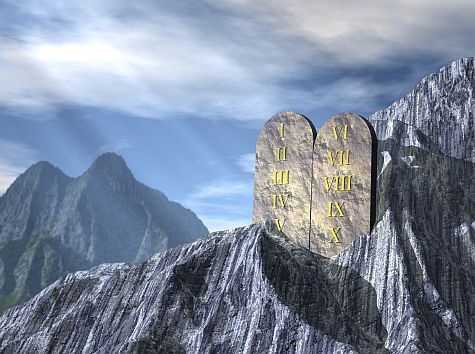
“Let me tell you something so beautiful. The ten Commandments are a whole shekel, and the broken commandments are half a shekel, it is a broken thing.
You know, every person has whole commandments which he didn’t break yet, and then everybody has little broken commandments deep down in their souls.
And you know what a good friend is? Somebody who puts his broken tablets and my broken tablets together.
To a lot of people I often openly show my good commandments, but the broken tablets I’m afraid to show. But then between such good friends, we share our broken commandments. Some day the world will be so close we’ll tell each other we all fell. We all broke the commandments.
What do you do when something breaks your heart – you close your eyes: can’t see it, don’t want to see it – it’s too deep.
You know, when you kiss somebody, you know what you tell them – I love you so much – but I love you so much, it breaks my heart.
Why do children close their eyes when they are born? They want to know how much their parents love them even when they don’t see them.
You know why the Jewish people count after the moon? The sun is beautiful, the sun is always whole. The real light is the moon – its full, and its also broken.
You know the Talmud begins with page two. Page one – the blank paper – its a broken page – nothing’s written on it. And you know when you finish learning, when you learn a little bit, when you study with the deepest depths of your heart and your soul – you kiss the blank paper. Because real learning, the real understanding is so deep,
Want you to know: Once a year there was a collection for the sacrifice of the Holy Temple. And everybody was giving half a shekel – a broken shekel. And this is how we kept the Holy Temple going.”
King David, the psalmist wrote the following words after he had committed a grievous sin in the sight of God: “My sacrifice to you is a broken spirit; God, you won’t spurn a broken, chastened heart.” (Psalm 51 18-19)
Dear friend, I would exhort each one of us to make wise choices and live in the fullness and abundance as a child of God, set free from all encumbrances that tie us up in knots. So, be a good custodian! God in His mercy, who is faithful and true to His word has provided us with a means of reconciliation through Yeshua. If we say we have no sin we deceive ourselves, but if we confess our sins He is faithful and just to cleanse us from all iniquity! God has provided us with the means, through Yeshua, to live a life filled with abundance.
And so, you see how brokenness is the starting point for learning to become a good custodian. The heart of fidelity is most precious in the sight of God, but it comes at a price. Are you willing to pay that price today?
This ends our reflection for this parasha and concludes the book of Leviticus. Let us say the traditional blessing after finishing a book in the Torah:
“Chazak chazak v’nitchazek” (“Be strong, be strong, and let us be strengthened”)
Raphael ben Levi