Deut 1:1 – 3:22. Isaiah 1:1-27
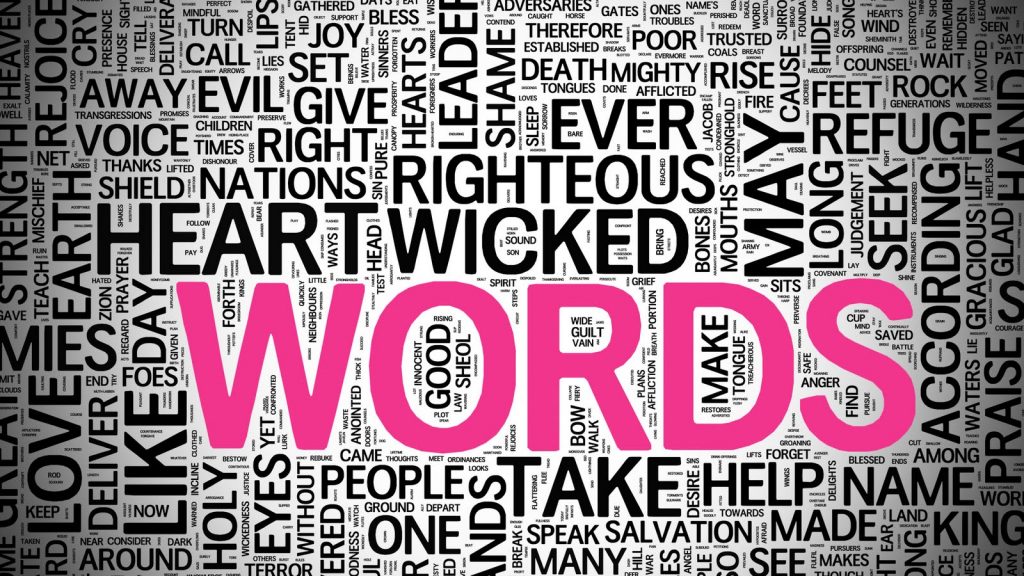
This week’s Torah portion opens with the 5th Book of the Torah called D’varim (Words): “These are the words [D’varim] which Moses spoke to all Israel on this side of the Jordan in the wilderness.” (Deut 1:1)
The book has another name known as Deuteronomy from the Latin meaning “The Second Law”) because before Moses ascended the mountain to see from afar the land promised by the Lord to Israel as an eternal inheritance, he repeated many of the laws given earlier but with edits from those found in Ex, Lev, and Num. One of these major changes was the centralisation of worship in Jerusalem and the destruction and defiling of every other place in the land used for worshipping the God of Israel.
Later, in 2 Kings 22:8-10, we read how King Josiah made major reforms in Israel that adjusted many of the religious practices restricting service in the Temple in accordance to the instructions found here in Deut.
A key reason for the changes that we find here in this parashah was for the equipping of the nation of Israel living in permanent dwellings like the other nations in contrast to their temporary dwellings in the wilderness to fit their new circumstances. One of the first things that Moses understood as the Israelites entered the land was the need to establish a shared leadership and so he instructed the people to, “…choose wise, understanding, and knowledgeable men from among your tribes, and I will make them heads over you …So (he) took the heads of (each) tribe, wise and knowledgeable men, leaders of thousands, leaders of hundreds, leaders of fifties, leaders of tens, and officers for your tribes.” Deut 1:13-15
We are reminded from the title of this parasha (D’varim [Heb]- words) about the power of words, whether spoken by God directly to us or in Scripture, or whether they be words spoken over ourselves or others. Much is made of this in the Book of James where he emphasises how there is no neutrality in the words we speak ministering life or death with no in between. The Book of Prov (12:18) speaks of “…one whose rash words are like sword thrusts, but the tongue of the wise brings healing” emphasising the power of our tongues and Prov 18:21 confirms this by saying, “Death and life are in the power of the tongue, and those who love it will eat its fruits.” The Bible is filled with examples of this and cautions us against its ungodly use particularly in the area of gossip and slander ‘lashon hara’. Equally, from a godly perspective, our words have a widespread influence many times beyond our knowledge or imagination which can bring healing and salvation to others and victory in our personal lives against every demonic attack from the enemy. Paul says in Rom 10:9-10 that “…if you confess with your mouth that Yeshua is Lord, and believe in your heart that God raised Him from the dead, you will be saved. For with the heart it is believed for righteousness, and with the mouth it is confessed for salvation..” )
And so Moses spoke to the Israelites about their 40-year period in the wilderness, and reviewed everything that God had commanded to instil a positive application to bring life for them and future generations.
The previous Torah portion known as ‘Ma-asei’ (Journeys) describes 42 journeys of the Israelites that were chronicled by Moses over a 40-year period, Some were only a day’s journey, others a week, a month, a year or even longer. During that period the Israelites received the Ten Commandments at Mount Sinai and were happy to stay there but had they done so they would forfeited God’s best and never entered Canaan.
This kind of apathetic “stay-in-the-comfort-zone” approach is a dangerous thing to contemplate let alone fall into. Biblically, the opposite of love is not hate but apathy and directly linked to exile and assimilation. Spiritual assimilation is a scourge that has dogged the Jewish people from pillar to post until now. Assimilation was a major reason why the Jewish people abandoned God’s Torah and exchanged it for the pagan culture of the nations. Even in those who perished considered themselves more German and Austrian than Jewish before they realised with horror that Hitler held a different view but by then it was too late.
This pressure to assimilate has also dogged Messianic believers throughout church history with the expectation to shed Jewish identity to be accepted as a ‘true Christian’ based upon the heresy that the church has replaced the Jewish people in God’s eternal plan and through Christ Israel and the Jewish people have become irrelevant.
As we approach Tisha (9th) B’Av, we can see the consequences of assimilation and spiritual infidelity are graphically illustrated by exile and we will be focusing upon this later but in this week’s parasha, when Moses shared his parting words to the Israelites, he communicated something beautiful about the character of God.
Despite Israel’s constant disobedience and grumblings, God carried them through the wilderness throughout their 40-year journey the way a loving father carries his children because His judgement and discipline is different being rejected – something impossible for God to do because of His covenant promises. Here we read in the first chapter of Deut. these amazing words of encouragement: “The LORD your God, who is going before you, will fight for you, as He did for you in Egypt, before your very eyes, and in the wilderness. There you saw how the LORD your God carried you, as a father carries His son, all the way you went until you reached this place.” (30–31)
The tender loving care of our Abba Father takes our weaknesses and failings upon Himself and carries us in His arms when we stumble and fall. The most beautiful example of this can be found in the parable of the Prodigal Son where the father broke every cultural norm of the day in his demonstration of spontaneous love for his son when he saw him from afar returning from exile.
In our Haftarah portion from Isaiah, the Lord explains the means of redemption which He would provide with the promise of a Redeemer who will cleanse from all sin: “Come now, and let us reason together,”Says the Lord.“Though your sins are like scarlet,they shall be as white as snow; Though they are red like crimson, they shall be like wool.” (Isa. 1:18}
According to rabbinic tradition, (Yoma 39b) a scarlet woollen thread was tied to the door of the Temple on the Day of Atonement. When the scapegoat reached the wilderness (Lev 16:10), if the sins of Israel were forgiven the thread would miraculously turn white. 40 years before the destruction of the Temple (i.e., around 30AD) the change of colour was no longer observed because provision for the remission of our sins had already been made. God’s prophetic promise found here in this passage in Isaiah, has found its fulfilment in Yeshua which was ratified with His own blood.“It was the LORD’s will to crush Him and cause Him to suffer, and through the LORD, makes His life an offering for sin.” (Isai. 53:10)
Although each person is accountable to God, and although there are consequences for sin, God can transform even the worst situation into something beautiful as with His eternal purposes governing the Jewish people.
There is an old Jewish saying which illustrates the heart of a true intercessor:“Master of the world, I know that the Third Temple is not built with stones; it’s built with tears. So if all you need is just one more tear, please let it be my tear.”
These words reflect perfectly what Yeshua has won for us, willingly paying a terrible price by suffering, shedding His tears and offering His sinless body (a temple) as a sacrifice for our sins as prophesied in John 2. The Judeans asked Yeshua, “What miraculous sign can you show us to prove you have the right to do all this?” 19 Yeshua answered them, “Destroy this temple, and in three days I will raise it up again.” 20 The Judeans said, “It took 46 years to build this Temple, and you’re going to raise it in three days?” 21 But the “temple” he had spoken of was his body. 22 Therefore, when he was raised from the dead, his talmidim remembered that he had said this, and they trusted in the Tanakh and in what Yeshua had said.”
When we experience the ‘Fellowship of His Sufferings’ it is like shedding tears together with Him, and every tear we shed is bringing His return a little closer. “So if all you need is just one more tear, please let it be my tear.”
Paul in the Book of Romans takes this to its ultimate conclusion when he expressed his grief on behalf of the Jewish people as with the sorrow of Tisha B’Av to such an extreme that we can almost feel the agony in his words when he cried out in anguish: “..I would pray that I myself were cursed, banished from Messiah for the sake of my people—my own flesh and blood, who are Israelites.”
This is the ‘curse’ we experience at Tisha B’Av as we stand in intercession for the Jewish people and pray for their salvation. But also it implies a warning to Israel’s enemies as in Gen 12:3: “Those who curse you (Israel) will be cursed and those who bless you will be blessed.”
The first word for “curse” – מְקַלֶּלְךָ (mekalelcha) has a root meaning, “to make light of something heavy.” The second word for “curse,” אָאֹר (a-or) has a completely different root that means,“to utterly destroy.” So in effect God is saying ,“I will bless those who bless you, but those who disrespect you, I will utterly destroy.”
To stand on the side lines is the same as as condoning an action and as we have seen, Tisha B’Av teaches us to stand up against all forms of unrighteousness in every shape and guise and mourn the evil that surrounds us on every side.
So, who will stand up to be counted and stand in the gap as part of the remnant of the unashamed? “For I am not ashamed of the Good News, for it is the power of God for salvation to everyone who trusts—to the Jew first and also to the Greek. 17 In it the righteousness of God is revealed, from trust to trust. As it is written, “But the righteous shall live by emunah.” [Rom 1:16]
With these things, let’s move now to focus specifically on Tisha B’Av that we will be commemorating from this evening.
This Shabbat which is connected to Tisha B’Av (the 9th Av in the 5th month of the Hebrew calendar) is known as Shabbat Chazon (שבת חזון—Sabbath of Vision) The name comes from Isai 1:1-27: “The vision of Isaiah the son of Amoz, which he saw concerning Judah and Jerusalem in the days of Uzziah, Jotham, Ahaz, and Hezekiah, kings of Judah.”
The book of Isaiah describes a Divine love story concerning His covenant people who through constant rebellion and betrayals invoke judgement and exile. Yet, God remains faithful to His promises and Scripture reveals to us how the story will end.
So at Tisha B’Av, the Jewish people grieve over their sins that eventually led to the destruction of the 1st & 2nd Temples. (Plus many other calamities).
Tisha B’Av falls at the end of the period known as ‘Bein Ha Metzarim’ (between the straits) a period of calamity for the Jewish people from 17th Tammuz (4th month) to the 9th Av (5th month).
The phrase ‘Bein ha Metzarim’ is taken from Lament 1:3: “Y’hudah has fled into exile from oppression and endless slavery. She lives among the nations, but there she finds no rest. Her pursuers have all overtaken her in the midst of her distress.”
‘Bein ha Metzarim’ actually means to navigate one’s way between grave dangers on both sides – like a ship steering its way through a narrow path to avoid an inevitable shipwreck. The Bible teaches us that should we ever allow anything to mar our relationship with God, we will ultimately find ourselves ‘between the straits.’ It is also a term used in reference to labour and childbirth because it is a critical time where if things go badly it could lead to dire consequences.
What is the transition point for, Bein ha Metzarim? It is when God provides ample opportunity to restore us to Himself before there is judgement. And so, the 9th Av, is set aside as a time of mourning and fasting over a 24 hour period with the promise in Zech. 8:19 that all the biblical fasts we observe will one day be turned into times of joy because God never intended us to be entrenched in mourning but rather lead us from a narrow place (Mitzraim) to one that is spacious. (Ps 84),
It is interesting that even during periods of mourning, God always provides a silver lining just like in this period and is why Orthodox Jews participate in a ‘seudat mitzvah’, a celebratory meal as a reminder that even in the darkest seasons we have much to celebrate!
Tisha B’Av (9th Av) in the 5th month of the Hebrew calendar is a day of deep mourning comparable to Yom Kippur. The greatest tragedies in Jewish history occurred on this day with the destruction of the 1st Temple where millions of Jews were slaughtered or taken into exile for 70 years, and with the destruction of the 2nd Temple. 2 million Jews were butchered or exiled on this occasion for nearly 2,000 years.
Many other terrible events occurred on 9th Av throughout Jewish history including the failure of the Jewish uprising known as the Bar Kochba revolt against the Roman Empire in 132 AD that was crushed by the Emperor Hadrian. Over 100,000 Jews were slaughtered. One year later again on 9th Av, the Romans ploughed the Temple Mount and the city of Jerusalem turning it into a Roman colony and renaming it A-elia Capit-olina.
The Crusades began on 9th Av 1095 AD where countless innocent Jews were slaughtered and whole Jewish communities obliterated;
On the eve of Tisha B’Av, 1492, an edict was given by King Ferdinand of Spain to expel all its Jewish citizens. Every Jew was given the choice to convert or leave. So was birthed the Inquisition one of the darkest periods in church history.
On Tisha B’Av 1914 AD (August 1)—The commencement of World War 1, that led to the economic conditions in Germany to provide Adolf Hitler with the necessary influence that led to WW2 to facilitate his attempted ‘Final Solution’—the extermination of the Jewish people – and so on…
We mourn at Tisha B’Av our rebellion against God that affects both those who are innocent not just those who are evil. Jewish populations have been expelled from at least 79 countries over the past 2000 years. They have been massacred, humiliated, scapegoated and the focus of vicious anti-Semitism and planned exterminations.
True mourning is an integral feature of Tisha B’Av but for many it is an act of going through the motions without true repentance. This is reflected with sadness in Zech. 7 through the prophet who was commanded by God to “…speak to all the people of the land and to the priests, saying, ‘When you fasted and mourned in the fifth and seventh months, even those seventy years you were in exile, was it for Me that you fasted, for Me?’” (4-5)
This is so different to the heart and sorrow of Paul who bore the grief of Tisha B’Av in his heart whose love for his people was so great that he made this staggering statement: “I am speaking the truth in Messiah. I am not lying: my conscience (enlightened and prompted) by the Holy Spirit bearing witness with me that I have bitter grief and incessant anguish in my heart. For I could wish that I myself were accursed and cut off and banished from Messiah for the sake of my brethren instead of them, my natural kinsmen and my fellow countrymen.” (Rom. 9:1-3) “If it were possible, I would stand in for my people and sacrifice my very salvation for them.”
In all the calamities associated with Tisha B’Av nothing was greater than the destruction of the 2nd Temple which linked directly to the rejection of Messiah Yeshua who prophesied about it 40 years before the event took place declaring “…for the days are coming upon you when your enemies will set up a barricade around you, encircle you, hem you in on every side, and dash you to the ground, you and your children within your walls, leaving not one stone standing on another – and all because you did not recognise your opportunity when God offered it.” (Luke 19: 43-44)
On two occasions they demanded Yeshua to show a sign that He was the Messiah and He answered them, “Destroy this temple, and in three days I will raise it up. Then (they) said, 46 years was this temple in building, and will You tear it up in three days? But he spoke of the temple of His body. When therefore he was risen from the dead, His disciples remembered that he had said this unto them; and they believed the scripture, and the word which Yeshua had said.” (John 2:18-22)
And when Yeshua was placed on trial for insurrection, people were bribed to falsely accuse Him and claim: “We heard him say, I will destroy this Temple that is made with hands, and within three days I will build another made without hands.” (Yeshua was prophesying spiritually about His own death and resurrection). (Mark 14:58)
This is why in Haggai 2, we read: “6 Yet once more I will shake not only the earth, but also the heavens, the sea, and the land. 7 I will rattle all the nations, and all that is valuable in the eyes of the world will be willingly brought to My house. I will see to it that it is filled to the brim with My glory. 8 “You see, all the silver and all the gold in this world already belong to Me. 9 You will stand by and watch as the magnificence of this new house will eclipse the magnificence of My first house. And in this new house, I will give you peace.”
Although Solomon’s Temple was superior in splendour to the 2nd Temple in physical construction and beauty, the 2nd Temple far exceeded the 1st one in glory. The mystery of the 9th Av is that it goes beyond mourning over God’s judgments, to the spiritual, physical restoration and fullness, as foretold by the prophet Zechariah.
Every true believer is described in Scripture as being a Temple of the Ruach ha Kodesh (1Cor 6:19), who makes His dwelling place in us. Satan’s intent is to defile that temple and steal, kill and destroy us. Scripture warns us not to grieve the Ruach ha Kodesh through rebellion which always results in pain, regret, and loss as illustrated with the history of the Jewish people.
Our focus should always to be alert and sober against the wiles of the enemy (1Peter 5:8) which we ignore at our peril. The darkness is gathering intensity as we see things disintegrating all around this world, but how should we be responding?
God provides us with all the weapons of warfare needed to plunder the enemy and walk as more than conquerors in Yeshua. Each weapon is described in Eph 6 to engage the enemy under the banner of His Divine protection. And, “since we have a great high priest who has passed through to the highest heaven, Yeshua, the Son of God, we hold firmly to what we acknowledge as true.” (Heb 4:14)… the truth…the One who is THE TRUTH.
- The belt of God’s truth destroys the power of lies (deceptions, manipulations, falsehood, corruption which are all forms and disguises). This is our vengeance where all forms of lies must ultimately bow the knee to the one who is the way, the truth and the life.
- The gospel (good news or celebration) of shalom, (our footwear) destroys the authority which binds the world to chaos, which is our vengeance.
- The sword of the Ruach ha Kodesh that pulls down strongholds and casts down imaginations, bringing into captivity every thought to the image of God. This too is our vengeance and our victory.
Spiritual warfare is not a pretty sight and comes at a price, for we come against the demonic realm which has an insatiable blood lust to destroy every good thing God has created through every conceivable expression of evil and subtleties.
Scripture tells us that Yeshua will return for a pure and blameless bride not one that is steeped in defilement. Believers who engage secretly and persistently in sin will reap their reward and are skating on thin ice. How much better to live a life worthy of Him as we prepare for His soon appearing!
Every choice we make has consequences, and God’s blessings for every believer is conditional to walking in His ways. In order to do this we need to “shema” (listen and obey). Yeshua said in John 10: “27 My sheep hear My voice, and I know them, and they follow Me. 28 And I give them eternal life, and they shall never perish; neither shall anyone snatch them out of My hand. 29 My Father, who has given them to Me, is greater than all; and no one is able to snatch them out of My Father’s hand.”
God goes to great lengths to help us listen and obey Him as we recognise His voice over and above the clamour of the world’s noise. He calls us to be faithful even as He is faithful that we might enjoy the fullness of walking in union with Him.
God’s silver lining in the month of Av is celebrated 6 days later on Tu B’Av. This is a fairly obscure feast that will rise in prominence at the return of Messiah because the key focus is Divine love and is why Tu B’Av is often described as a biblical Valentine’s Day! God is wooing His bride in preparation for His return! Many of the sages believe it will be on this day that the Messiah will return.
Tu B’Av reminds us that God has seasons and cycles we pass through which is the means by which He draws us closer to Himself: the valleys not just the mountain tops. Those who become entrenched in either one are in danger of missing out of knowing His fullness. “I want to know Him and the power of His resurrection and the fellowship of HIs sufferings…” (Phil. 3:10) Let’s never forget that God’s strength is always sufficient and His grace made perfect in weakness, meaning our utter dependence upon Him at all times. For as the Psalmist declared, “Who do we have in heaven and earth but You…?”
At this time of Tisha B’Av let’s be spurred on to fight the good fight of faith and not lose sight of all that God has stored up for us in eternity that we might be beacons that light up this dark world filled with darkness and shadows. And as we remember and intercede for Israel and the Jewish people, may our heart cry be for their salvation and redemption in Yeshua’s name.
Raphael ben Levi