Parsha Devarim. Deut.1:1 – 3:22. Isai.1:1-27
Tisha B’Av
By Raphael ben Levi
This week’s Torah portion opens with the 5th Book of the Torah, in Hebrew, ‘D’varim’ (Words) or in English, Deuteronomy from the Latin meaning “The Second Law”).
Before Moses ascended the mountain to see from afar the land promised by God to Israel as an eternal inheritance, he repeated many of the laws given earlier but with edits from those found in Ex, Lev, and Num. This is why it is named “Deuteronomy” (the Second Law). This would equip Israel, who had formally lived as wanderers in temporary dwellings, to settle into a lifestyle of permanence.
One of the major changes was to establish the centralisation of worship in Jerusalem and to destroy every other place in the land used for worship. In addition, Moses understood the need for establishing a shared leadership and so he instructed the people to, “…choose wise, understanding, and knowledgeable men from among your tribes, and I will make them heads over you ….” Deut 1:13-15
Sadly, such commands as these became neglected over time and only became re-established and fully implemented under the reign of King Josiah several centuries later (2Kings 22:8-10).
This parasha reminds us about the power of words, whether spoken by God directly or in Scripture, or through words spoken over oneself or others. We have shared about this several times in the recent past. Briefly stated, the Book of James serves to remind us that there is no neutrality in the realm of words spoken. Prov (12:18) refers to “…one whose rash words are like sword thrusts, but the tongue of the wise brings healing” and in Prov.18:21 “…Death and life are in the power of the tongue, and those who love it will eat its fruits.”
The Bible cautions us against employing ungodly speech especially regarding gossip and slander (‘lashon hara’). Conversely, godly speech is like a healing balm that changes lives for us and those around us.
The previous Torah portion known as ‘Ma-asei’ (Journeys) describes 42 journeys of the Israelites chronicled by Moses over a 40-year period, Some were only a day’s journey, others a week, a month, a year or more. During that period the Israelites received the Ten Commandments at Mount Sinai and were content to stay there but had they done so they would never have entered Canaan. So too, If we choose at all costs to remain in our comfort zones we will never fulfil God’s destiny which He has placed over our lives. This kind of apathetic “stay-in-the-comfort-zone” approach was a trap linked to assimilation that was a scourge which dogged the Jewish people from pillar to post – a major reason why the Jewish people frequently abandoned God’s Torah and exchanged it for a synchronistic lifestyle.
And yet when Moses shared his parting words to the Israelites, he communicated something beautiful about the character of God that went beyond Israel’s weaknesses and failings. In it all, God carried them through because of His faithfulness to His covenant promises. For example, in the opening chapter of Deut. God shared these words of encouragement to the Israelites: “The LORD your God, who is going before you, will fight for you, as He did for you in Egypt, before your very eyes, and in the wilderness. There you saw how the LORD your God carried you, as a father carries His son, all the way you went until you reached this place.” (30–31)
With us too as believers, God’s tender loving care takes upon Himself our weaknesses and failings and carries us in His arms when we stumble and fall. In the Parable of the Prodigal Son the father broke every cultural norm of the day in a show of spontaneous forgiveness for his son who had abandoned Him as he saw him from afar returning from exile. Scripture clearly states that “If we say we have no sin we deceive ourselves but when we confess our sins and make teshivah (return to Him in humility and contriteness of heart) He is faithful to forgive us and cleanse us from all sin.” (1Jn.1:8)
This aspect of God’s character is presented in our Haftarah portion from the Book of Isaiah. The Lord explains His means of redemption with the promise of a Redeemer who would cleanse us from all sin: “Come now, and let us reason together,”Says the Lord.“Though your sins are like scarlet, they shall be as white as snow; Though they are red like crimson, they shall be like wool.” (Isa. 1:18}
According to rabbinic tradition, (Yoma 39b) a scarlet woollen thread was tied to the door of the Temple on the Day of Atonement. When the scapegoat reached the wilderness (Lev.16:10), if the sins of Israel were forgiven the thread would turn white. 40 years before the destruction of the Temple (i.e., around 30AD) the change of colour was no longer observed because provision for the remission of our sins had already been made. God’s prophetic promise found here in this passage of Isaiah found fulfilment in Yeshua ratified with His own blood: “It was the LORD’s will to crush Him and cause Him to suffer, and through the LORD, makes His life an offering for sin.” (Isai. 53:10)
Although we are all held accountable to God, and although there are consequences for sin committed, God can transform the worst situation into something beautiful as we see here demonstrated with His covenant people.
There is an old Jewish saying which illustrates the heart of a true intercessor:“Master of the world, I know that the Third Temple is not built with stones; it’s built with tears. So if all you need is just one more tear, please let it be my tear.” These words reflect what Yeshua won for us that was lost from the fall of man. Only He was qualified to redeem us and willingly bore our sin upon His sinless body at a price He alone could afford.
The ‘Fellowship of His Sufferings’ (Phil.3:10) is akin to shedding His tears. Every tear brings His return a little closer. And so the sages would pray : “… if all you need is just one more tear, please let it be my tear.”
In the Book of Romans Paul takes this to its ultimate expression when he shared his grief regarding his kindred people: “…I would pray that I myself were cursed, banished from Messiah for the sake of my people—my own flesh and blood, who are Israelites.”
This is the ‘curse’ that we as believers are reminded of at Tisha B’Av as we stand in the gap for the Jewish people and all those who remain under the tyranny of sin: there is no place to remain on the side lines for that would be the same as condoning ungodliness. Tisha B’Av teaches us to stand against all forms of evil.
Tisha B’Av falls at the end of the period known as ‘Bein Ha Metzarim’ (between the straits) a period of calamity between 17th Tammuz (4th Hebrew month) to the 9th Av (5th month). The Bible teaches us that should we ever allow anything to mar our relationship with God, we will ultimately find ourselves ‘between the straits.’
What is the transition point for, Bein ha Metzarim? It’s the point when God provides us with an opportunity to restore us to Himself in place of impending judgement.
Tisha B’Av is recognised as a time for deep mourning. The greatest tragedies in Jewish history occurred on this day when God’s transition point was steadfastly ignored and this led led to the tragic destruction of the 1st and 2nd Temples.
Many other such tragic events also occurred on 9th Av . To name a few included the failure of the Jewish uprising known as the Bar Kochba revolt against the Roman Empire in 132 AD that was crushed by the Emperor Hadrian. Over 100,000 Jews were slaughtered. One year later again on 9th Av, the Romans ploughed the Temple Mount and the city of Jerusalem turning it into a Roman colony and renaming it Aelia Capitolina.
The Crusades began on 9th Av 1095 AD where countless innocent Jews were slaughtered and whole Jewish communities obliterated;
On the eve of Tisha B’Av, 1492, an edict was given by King Ferdinand of Spain to expel all its Jewish citizens. Every Jew was given the choice to convert or leave. So was birthed the Inquisition, one of the darkest periods in church history.
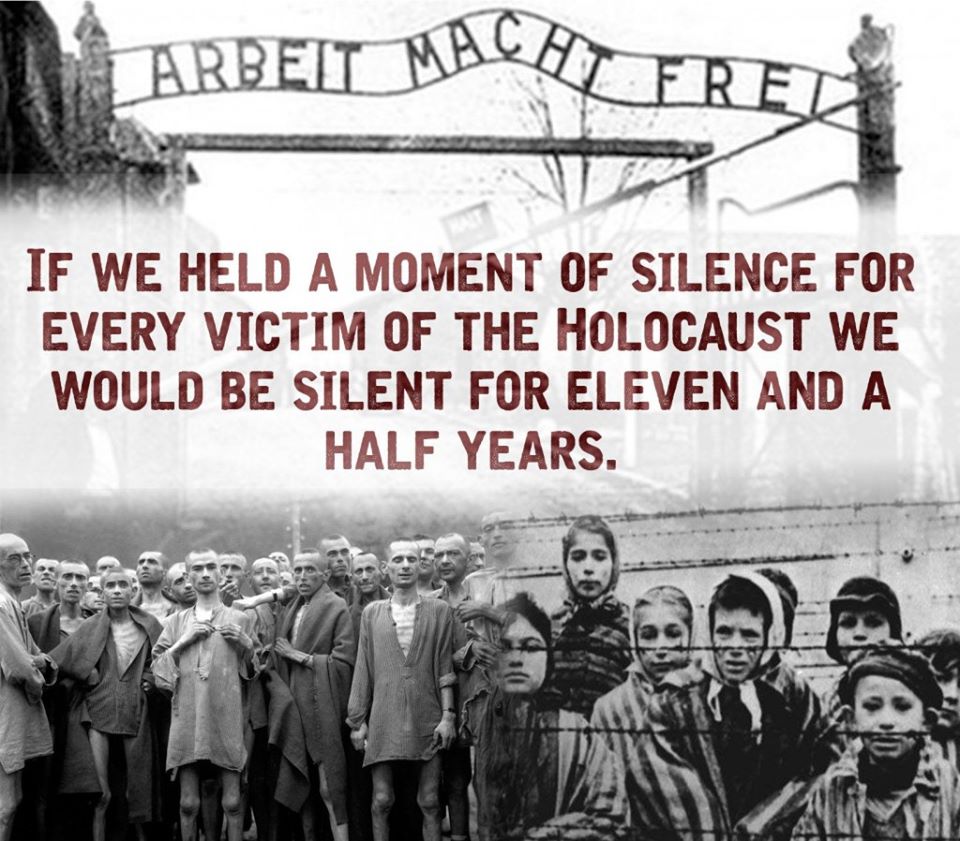
Tisha B’Av 1914 AD (August 1) marked the commencement of World War 1, that led to the economic conditions in Germany to provide Adolf Hitler with the necessary influence to facilitate his attempted ‘Final Solution’ — the extermination of the Jewish people.
Tisha B’Av expresses the consequences of rebellion against God that for the Jewish people, directly or indirectly that contributed to unimaginable horrors and persecutions. Entire Jewish populations have been expelled from 79 countries over the past 2000 years as scapegoats accompanied by every evil imagination directed towards them. Were they then casualties of their own folly? Many so called believers claim it to be true but this is something we must emphatically refute. Although Scripture does acknowledge that they have been responsible in part to the consequence of ungodliness that has led to Divine judgement, this must also be tempered by the fact that as God’s covenant people have been held to a higher level of accountability than other nations. But even so it does not answer why the Jewish people have been consistently the most persecuted on the face of the earth. In perspective, is the fact that evil spiritual forces have been constantly at work behind the scenes seeking to undermine God’s eternal purposes that are intrinsically interwoven with the Jewish people. As a consequence millions of innocent Jewish people have perished through crusades, blood libels, pogroms, holocausts and so many other expressions of anti-Semitism that have no bearing on Divine judgement.
A comprehensive understanding of Tisha B’Av can only be properly understood at this level. One end of the spectrum is reflected with sadness: “…speak to all the people of the land and to the priests, saying, ‘When you fasted and mourned in the fifth and seventh months, even those seventy years you were in exile, was it for Me that you fasted, for Me?’” Zech.7:4-5. Apostate Israel cannot be ignored.
Yet in contrast are the faithful remnant who express the true grief and mourning of Tisha B’Av like the apostle Paul who wrote: “I am speaking the truth in Messiah. I am not lying: my conscience (enlightened and prompted) by the Holy Spirit bearing witness with me that I have bitter grief and incessant anguish in my heart. For I could wish that I myself were accursed and cut off and banished from Messiah for the sake of my brethren instead of them, my natural kinsmen and my fellow countrymen.” Rom. 9:1-3 (i.e., “If it were possible, I would be willing to stand in for my kindred and sacrifice my very salvation for them.”)
How does all of this fit into the prophecy in Haggai 2:6-9? “6 Yet once more I will shake not only the earth, but also the heavens, the sea, and the land. 7 I will rattle all the nations, and all that is valuable in the eyes of the world will be willingly brought to My house. I will see to it that it is filled to the brim with My glory. 8 “You see, all the silver and all the gold in this world already belong to Me. 9 You will stand by and watch as the magnificence of this new house will eclipse the magnificence of My first house. And in this new house, I will give you peace.”
Although Solomon’s Temple was superior in splendour to the 2nd Temple in its physical construction and beauty, the 2nd Temple far exceeded the 1st one in glory. But in what sense is this true? We see it in Yeshua’s response to the question posed to Him by the religious hierarchy: “What sign can you show us to prove your authority to do all this?” Jesus answered them, “Destroy this temple, and I will raise it again in three days.” They replied, “It has taken forty-six years to build this temple, and you are going to raise it in three days?” But the temple he had spoken of was his body.”
So now we are able to gain some clarification in the matter. Yeshua’s body became the temple of God by the Spirit’s indwelling and by uniting the human body to the Divine nature in the person of our precious Messiah. Therefore, the glory of the 2nd Temple was greater than the 1st Temple resulting in the miracle that every true believer is now regarded by God as a “Temple of the Holy Spirit” (1Cor.6:19) who dwells within us! No wonder that Satan’s intent is to defile this temple through all means available. But we have been provided through Yeshua with weapons to plunder the enemy. Each one as described in Eph 6 explains how we can engage the enemy under the banner of His Divine protection. And, “since we have a great high priest who has passed through to the highest heaven, Yeshua, the Son of God, we hold firmly to what we acknowledge as true.” (Heb.4:14) And so we stand against all forms of deception, manipulation, falsehood and corruption whereby all creation must ultimately bow the knee to the one who is the way, the truth and the life.
Spiritual warfare is not a pretty sight for we come against an enemy with an insatiable blood lust to destroy every good thing God has created through every conceivable expression of evil and subtleties. Who is willing to stand and pay the price of discipleship?
God is challenging us as believers to take back territory occupied by the enemy under the direction of Holy Spirit. It is a huge swarth of territory but something we can take hold of wholeheartedly in His strength and authority. God has created us to be history makers. I believe there are moments in each person’s life when one can do something that may appear the most insignificant thing ever, yet is a moment God created us for that can change the course of history.
The secret of life is that although we always have to be true to ourselves, there are moments we have to be willing to go beyond our limits thereby entering the realm of the impossible because God can transform impossibilities into realities, failure into stepping stones, water into dry land, and hopelessness into new beginnings. He has created us to be history makers in His Kingdom! All that is required isa willing spirit to allow Him to take complete control of our lives that will enlarge our boundaries! We may not see the full impact of this until even the smallest things of our lives are revealed in eternity.
God’s blessings are conditional to walking in His ways. Yeshua said in Jn.10: “27 My sheep hear My voice, and I know them, and they follow Me. 28 And I give them eternal life, and they shall never perish; neither shall anyone snatch them out of My hand. 29 My Father, who has given them to Me, is greater than all; and no one is able to snatch them out of My Father’s hand.” The Holy Spirit helps us as we recognise and respond to His voice over and above the clamour of the world’s noise.
Many people, who claim to be believers live in spiritual exile because they fail to live according to God’s ways. As Rebbe Shlomo Carlebach once stated, “Why settle for being a spiritual garbage collector when you could be stringing pearls for the Kingdom of Heaven?” God sent us His Holy Spirit to dwell within us that we might be taught by Him and grow into the full stature of maturity that He has created us to be, for who knows what He can do through us when we yield our lives fully to Him in simple faith and obedience? For God has called us to be history makers that represents the flip side of Tisha B’Av.