VAYAKHEL (And He Assembled)
Ex. 35:1–38:20; 1Kings 40 – 8:21; 2Cor.9:1-15; Heb.9:1; Rev.11:1-13
By Raphael ben Levi
This week’s parasha, Va’Yakhel focuses upon a variety of things, notably the construction of the Tabernacle, as a dwelling place for God. The Torah devotes 50 chapters to the Tabernacle, and as we know the gematria of 50 holds significance in a variety of ways The number 50 is woven into the details God gave to the Israelites regarding the curtains, customs and size required for the tabernacle. A set of 10 curtains were with each one constructed from fine linen and coloured blue, purple and scarlet with cherubim on them (Ex. 26:1) and each curtain was to have 50 loops (v. 5) with 50 hooks of gold to connect the curtains (v 6).
A set of 11 other curtains, made of goat’s hair (Ex.26:7) were also to be crafted made with 50 loops, but these 50 hooks were to be made of brass (vs.10&11) symbolic of a variety of things from sin and judgement to healing, and Divine grace. And it also reminds us of God’s perfect justice that is unshakeable.
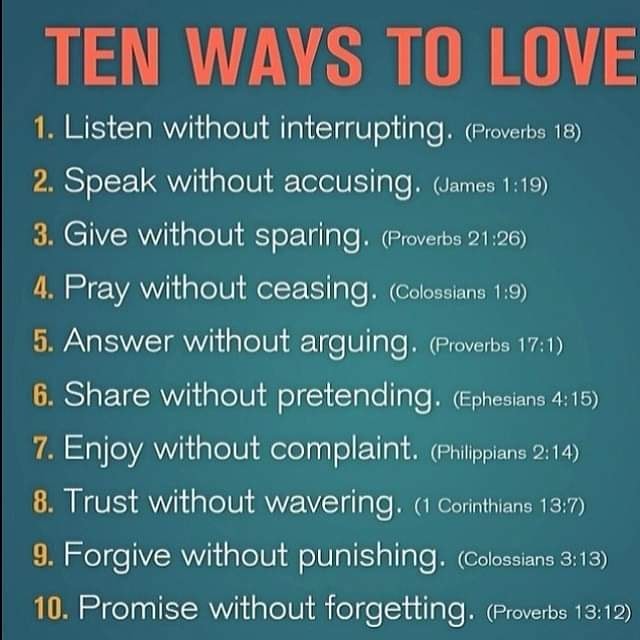
The symbolism contained in the Tabernacle contain numerous types and shadows that find their perfect fulfilment in Yeshua. Each detail surrounding the Tabernacle and Tabernacle worship, is precise and meaningful. The skilled artisans used for its construction, many who were foreigners from Egypt and elsewhere represent the Body of Messiah embracing Jew and Gentile. The Creator of the universe demonstrated His love through Yeshua for the whosoever who He loves equally. Therefore, it comes as no surprise that we are also commanded to love one another, and the measure we do so is the measure we are blessed and begin to understand and appreciate in deeper measure how precious WE are in His sight. And so it breaks my heart knowing there are so many disciples of Yeshua who question their worth because someone they loved made them feel unloveable. I know that some people have been through so much that even when they experience something good they feel like it’s a setup!
For example, the award winning author Fern Schumer Chapman, wrote about her mother that,
“…If my mother had been a (Holocaust) survivor, maybe she would be grateful, and could have felt each day as a gift, every year is a mission. Yet, as an escapee, she feels she doesn’t deserve to live. For that matter, she’s not sure she wants to, not without her parents. Her understanding is stuck in a twelve-year-old’s broken heart. All she can know is that her mother and her Motherland abandoned and rejected her, and that’s what she can never escape.” She used the following example to illustrate her point:
“When I was ten and our family returned from an unusual, delightful weekend of downhill skiing, I saw the limitations of (my mother’s) happiness. When we got home, she locked herself in the bathroom and sobbed wildly from behind the door. “What’s wrong” my father asked as he knocked? “Didn’t we have a good weekend?” She refused to open the door, but yelled from what seemed like the other side of a gulf. “Yes, we had a wonderful time. I don’t think I will ever have a day like this again. I have never been so happy and I doubt if I’ll ever be again. I don’t deserve it.” Yet, despite the problems, aches, pains and personal tragedies in life, the fact remains that God’s love is always available and apprehensible when we know the right place to look.
How many times do we stand in awe reflecting retrospectively how God faithfully stood with us at every moment throughout our lives yet at the time never knew it. And how many times did He go before me to prevent us falling headlong into the traps we would otherwise have fall into? Sometimes it may have been in a way that we had wrongly interpreted as rejection, but just as with the Purim story, God intervened behind the scenes so that the traps Satan had laid would pass us by before we had even got there. Our, frustration, irritation and false perception that we had wrongly interpreted as rejection was, as rather God’s infinite love and protection – “Hester Paneem”, God’s concealment, that would reveal His steadfast love and care! And our response to this beautiful and wondrous fact cannot be less than to bow before Him in thankfulness and worship.
In Lev.1:2 Moses stated that, “…when one (the Israelites) offer a sacrifice to the Lord, …the sacrifice must be taken from the cattle, sheep or goats.” However, when we read the phrase in Hebrew it actually says “when someone offers a sacrifice of you”. (adam ki ya’kriv mikem) In other words, it speaks of surrendering our lives fully to Him. As disciples of Yeshua, God invites us to bring everything to the feet of the cross – everything. The physical form of sacrifice, an animal offered on the altar, was only an outward manifestation of an inward reality. The real sacrifice was and always will be ‘mikem’: “of you” – (i.e., the totality of our lives).
God’s commandments are summarised in Matt. 22 when Yeshua was asked, “What is the greatest command?”
He replied from Deut.6:5: Ve-ahavta et Adonai Eloheinu b’chol lev-vecha u’vchol naf-shecha u’vchol meodecha and Deut.19:18 v’ahavta l-rey-acha k’mocha, “You shall love your neighbour as yourself,”
The Hebrew word for ‘neighbour’ can mean both a friend or an acquaintance, but Yeshua takes things one step further (“You have heard it said, but I say unto you… love your enemy, bless those who persecute you” ) something impossible – I mean to love ones enemies. Really? – But then Yeshua immediately reinforced it making things crystal clear by sharing His Parable concerning forgiveness in Matt.18:21-35) and in His Parable of the Good Samaritan in Lk.10:25-37.
Why was Yeshua command so critical and pivotal to our own health and well-being? It’s because the world has no answer whenever we demonstrate this impossibility made possible through Yeshua, both individually and corporately. It is our greatest victory over those who are our enemies who hate and despitefully use us. We have heard about people like Corrie Ten Boom and many like her who endured profound pain from others which God used to bring transformation to them but also to their enemies – a double whammy for Satan!
God sought to transform the Israelites into a ‘kehillah’, (a community) from being ‘peruah,’ meaning “wild, disorderly, chaotic, unruly, tumultuous” following the terrible episode of the golden calf. At that point they were not a community. How many churches are like this rather than a community in the biblical sense? Moses began by instructing the Israelites to build the mishkan (Tabernacle) as a symbolic home for God and alongside this he spoke to them about the laws of Shabbat. Shabbat and the mishkan were two of the most powerful ways for them to build community.
It is an easy thing to bow the knee to the “golden calf” so Moses instructed the Israelites to build the Tabernacle, as a symbolic home for God and then by reminding the people of the laws of Shabbat. Before work on construction began, Moses assembled the Israelites and cautioned them to avoid all physical work on Shabbat.
Indeed, Scripture has more to say about Shabbat than any other command (111 times) in the Torah. God intentionally created us with limited energy to teach us that work is necessary but is not the substance of our existence.
In Heb.4:9-12 we find these things reflected: “So there remains a Shabbat rest for the people of God. For the one who has entered God’s rest has also ceased from his own work, just as God did from His. Let us, therefore, make every effort to enter that rest, so that no one may fall through the same pattern of disobedience.
Spiritual rest (Matt.11:28-29) is a provision and shadow of the eternal rest that He promises for everyone who knows and loves Him.
In Judaism, community is an essential part and expression of spiritual life. For example, corporate prayers require a minyan. Whether one celebrates or mourns, one does so as a community. Even when confession of sins are made at Yom Kippur, with ‘Kol Nidrei’ it is done corporately. One sages have said that one cannot live in isolation as a Jew and still be Jewish. And likewise, we cannot live our lives as disciples of Yeshua in isolation and easily remain believers other within rare and extenuating circumstances otherwise we will eventually lose our identity.
When we glorify God we give Him honour. The word for glory in Ex.40:34 is “kavod,” that’s related to the Hebrew words for honour (kavod) and heavy (kaved). In Isai.6 when the prophet encountered the presence of God it was so heavy (kaved) that he cried out in anguish, “Woe to me! I [too] am doomed! — because I, a man with unclean lips, living among a people with unclean lips, have seen with my own eyes the King, Adonai-Tzva’ot!” (v.4)
So when we give someone kavod, it means to give them honour or respect – it’s a heavy thing, profound and filled with significance and meaning (kaved) when we treat somebody with importance and value without distinction.